Blanton's is the most confusing allocation bottle in bourbon
A search for "Blanton's single barrel" turns up at least five distinct bottles, two pricing realities (MSRP and secondary), and a patchwork of geographic availability that changes every release cycle. If you've ever walked into a liquor store, seen the horse-and-jockey stopper, and wondered whether you were looking at the US release or the Takara Red Japanese import, you're not alone. This guide sorts the variants, flags which ones are legitimately worth chasing, and gives realistic price expectations from a retailer's desk.
The short version of what Blanton's actually is
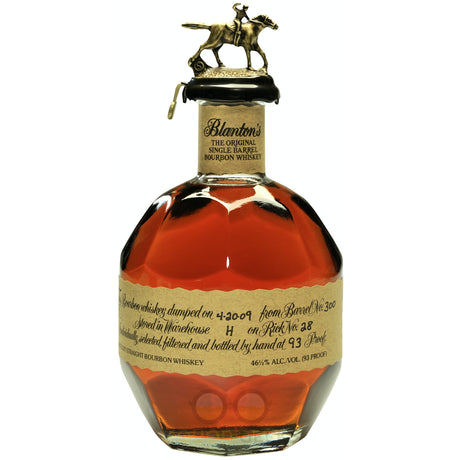
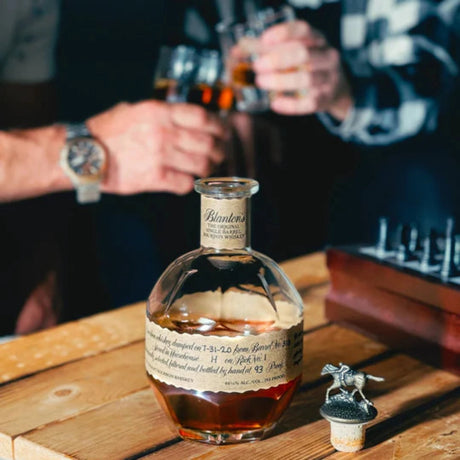
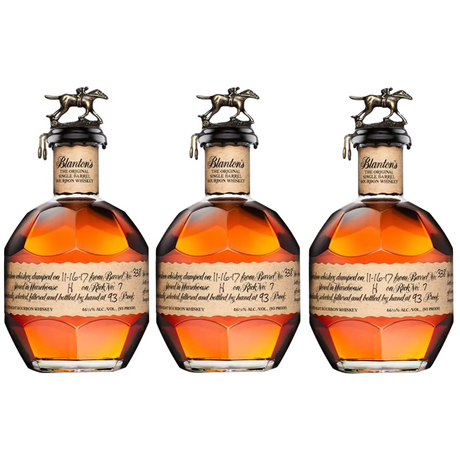
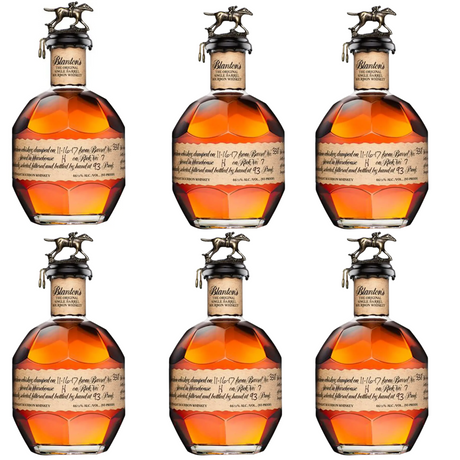
Blanton's is produced at Buffalo Trace Distillery (same house as Eagle Rare, Weller, Pappy) and uses Buffalo Trace's higher-rye mashbill — approximately 12–15% rye, the same recipe family as Elmer T. Lee and Rock Hill Farms. Each bottle is a single-barrel expression: the whiskey comes from one specific barrel, not a blend. Barrels are selected from Warehouse H, a metal-clad rickhouse known for extreme temperature swings that accelerate the aging interaction between whiskey and wood. The horse-and-jockey stopper has eight letters collectively spelling BLANTONS — collectors chase complete sets.
Blanton's Original Single Barrel (Gold Label — US)
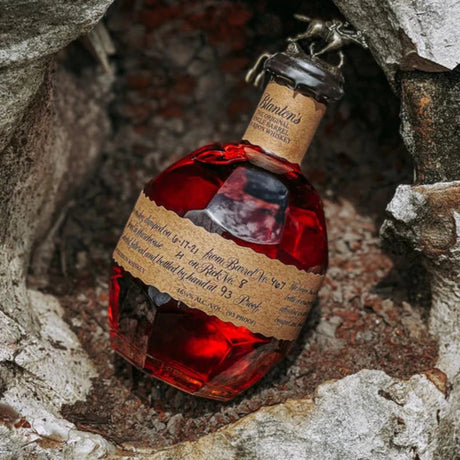
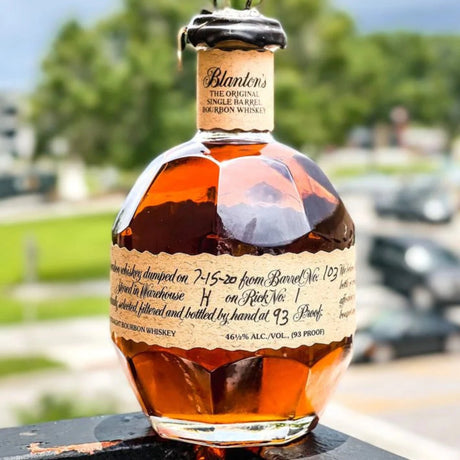
This is the bottle most Americans think of when they say "Blanton's." 93 proof, bottled for the US market, black label with gold accent. MSRP is around $70 but it has not reliably sat at MSRP in years — expect $80–$110 at honest retailers and $150+ secondary. Nose: butterscotch, caramel, a touch of orange peel. Palate: medium-bodied, sweet corn forward, mild rye spice, a drying oak finish. It is a good bourbon. It is not a life-changing bourbon. The scarcity, the presentation, and the stopper-collecting game are what drive the secondary market — not the absolute quality of the liquid at that proof.
Blanton's Gold Edition
Gold Edition was originally an export bottle but has become increasingly available in select US markets. 103 proof — the step up in proof is genuinely meaningful. Richer, more oak-driven, longer finish than the Original. Where it is available at MSRP (~$120), it is a better buy than the Original. Where you are quoted $250–$350 secondary, you are paying a premium that mostly reflects scarcity, not a proportional quality jump.
Blanton's Straight from the Barrel (SFTB)
The grail variant for most Blanton's hunters. Bottled at cask strength — typically 125–135 proof, varying barrel-by-barrel — and primarily exported to Europe and Asia. Not officially sold in the US at retail. Bottles that surface domestically are almost always import-routed, which means secondary. Expect $400–$700 for a legitimate sealed bottle in 2026. The flavor delta is real: SFTB drinks like the Original with the volume turned up — bigger caramel, richer oak, a meaningful alcohol punch that rewards a splash of water. Worth the hunt? For committed bourbon drinkers, yes. For casual sippers, no.
Blanton's Silver Edition
Silver is a step up in proof from the Original (103 proof, silver label instead of gold) and historically a duty-free / export market release. Availability in the US is inconsistent, though some states see periodic allocations. Where found at MSRP (~$120), it is a meaningful upgrade on the Original. Secondary pricing runs $200–$350. Flavor-wise it bridges the gap between the Original and SFTB — drinkable, elegant, noticeably richer than the Gold Label.
Blanton's Takara Red Edition
Takara is the Japanese distributor for Blanton's, and the Takara Red edition is a Japan-market bottle with distinct labeling. Proof varies by release (80 proof on some, 93 proof on others — verify the label). It is the easiest Blanton's variant to get confused about because the labeling is visually similar to the US Original. Takara Red bottles are not officially imported to the US, so anything domestically is gray-market. Pricing is all over the map — typically $300–$500 — and quality relative to the US Original depends entirely on which specific Takara release you're holding.
Blanton's Special Reserve and other market variants
Special Reserve (Green label, 80 proof) is a duty-free / travel-retail release that surfaces from time to time, usually with weaker appeal than the higher-proof bottles. There are also Japan-specific warehouse-selected releases (Takara Gold, specific single-barrel picks) that almost never reach US consumers at reasonable prices. Unless you are a completionist, ignore these in favor of getting a Silver or SFTB.
The honest buyer's priority list
If you walked into my shop with $500 and wanted to build a Blanton's-centered bourbon experience:
- Blanton's Original Gold Label, at or near MSRP. This is the anchor bottle.
- Blanton's Gold Edition or Silver, at MSRP. Either one is a genuine step-up in proof and complexity.
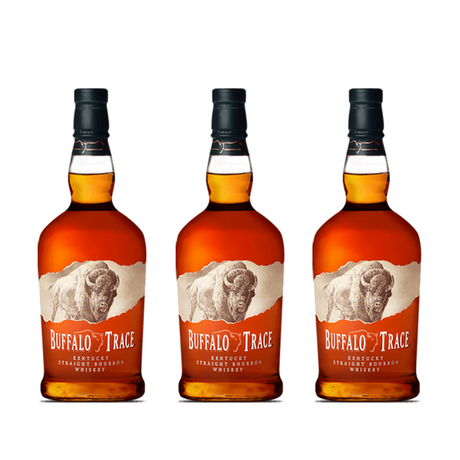
- Blanton's Straight from the Barrel, only if secondary pricing is below $500. Above that, I'd rather put the money into an Eagle Rare 10, Buffalo Trace, or even a Weller Antique 107 stack.
- Skip Takara Red and Special Reserve unless you're specifically collecting.
Browse the current Blanton's collection or broader bourbon range.
Is Blanton's a good gift?
Yes — with caveats. The horse-and-jockey stopper gives the bottle presence on a shelf, the single-barrel story reads as premium, and the price point ($100–$150 for the Original at honest retail) lands in the "thoughtful, not ostentatious" gifting range. For a recipient who does not already own Blanton's, the Original is the right pick. For a recipient who has owned it for years, a Gold Edition or Silver at MSRP lands better. Our gifts for bourbon collectors guide covers the tradeoffs, and luxury whiskey gifts has higher-end options.
How to spot a fake Blanton's
Counterfeits exist, especially for SFTB and Silver. Checks:
- The stopper letter should be clearly cast and centered; blurred or misaligned letters are a red flag.
- The glass has a distinctive orb-shape with a textured base — factory units are consistent.
- The hand-written barrel number, warehouse number, and bottling date are legible on every authentic bottle.
- Packaging box (where included) has specific branding and foil registration.
- Buy from licensed retailers; avoid private sales on auction sites unless the seller has verified Blanton's-specific provenance.
FAQs
What is the difference between Blanton's Gold and Blanton's Gold Edition?
"Gold Label" is the original US Blanton's at 93 proof. "Gold Edition" is the export/select-market 103-proof variant. They are different bottles, despite the overlapping name.
Is Blanton's SFTB worth the price?
At MSRP (if you can find it): absolutely. At $500+ secondary: only if you already own every other Blanton's and want the completion. At $700+: no, put the money into other Buffalo Trace allocations.
What mashbill does Blanton's use?
Buffalo Trace's higher-rye mashbill (Mashbill #2) — approximately 12–15% rye, the same family as Elmer T. Lee and Rock Hill Farms.
Is every Blanton's from Warehouse H?
Yes. All Blanton's single-barrel bottlings are drawn from Warehouse H at Buffalo Trace Distillery.
The takeaway
Blanton's is a brand whose story (Warehouse H, the stopper set, single-barrel selection) is bigger than the taste of any one bottle. If you can buy the Original at MSRP, take it. If you can find Gold Edition or Silver at MSRP, take that first. Skip secondary pricing unless you know exactly what you are paying for. The Blanton's collection and bourbon collection have current availability; confirm shipping on our shipping page.