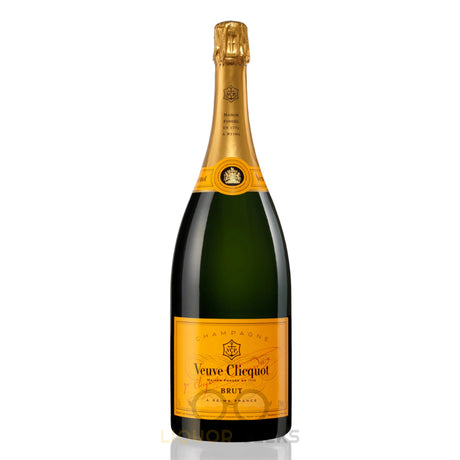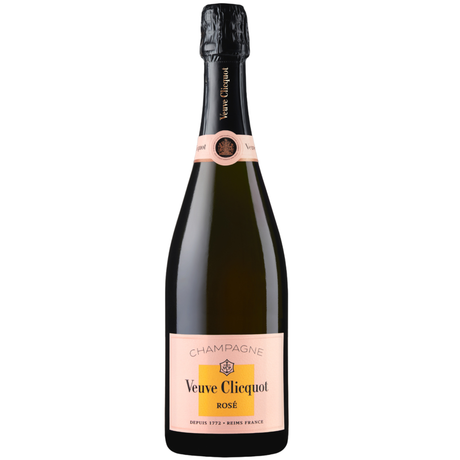

Veuve Clicquot shows up on more Thanksgiving tables than almost any other Champagne house, and there's a simple reason for that: the maison built its reputation on consistency, and consistency is exactly what a holiday spread of green bean casserole, cranberry sauce, and three competing pies actually needs. But "Veuve Clicquot" isn't a single bottle—it's a full range that runs from the everyday Yellow Label Brut through a fruit-forward Rosé to the prestige-tier La Grande Dame. Which one belongs on your table, or in your hostess-gift bag, depends on your guest list, your menu, and how far you want to reach on the shelf.
The Baseline: Veuve Clicquot Yellow Label Brut
Start with the bottle that built the house. Veuve Clicquot Yellow Label Brut is a non-vintage blend of up to 60 different crus, weighted toward Pinot Noir for structure, with Chardonnay for lift and Pinot Meunier for fruit. The house holds a meaningful share of reserve wines back every year specifically so Yellow Label tastes the same whether you bought it last November or this one—a genuinely useful trait when you're serving a room of relatives with wildly different palates and nobody wants a surprise.
It reads as toasty and orchard-fruited, with enough acidity to survive a table loaded with rich, buttery sides. If you're only buying one bottle for the day, this is the one. It's also the bottle to default to if a recipient's taste in wine is unknown—the brand recognition alone does a lot of the work in a gift.
Rosé: The Better Match for a Table Full of Savory-Sweet Dishes
Veuve Clicquot Brut Rosé starts from the Yellow Label blend and adds a portion of the house's own still red wine, a technique Madame Clicquot herself pioneered in 1818. The result carries more red-fruit character—think strawberry and redcurrant—alongside the same brioche backbone, and it has just enough weight to stand up to a glazed ham or a cranberry-heavy plate without getting lost.
Rosé Champagne also does something practical at a Thanksgiving table: it photographs well and reads as an occasion wine the moment it's poured, which makes it the stronger pick if you're hosting and want the arrival of the Champagne to feel like an event rather than a formality. If your Thanksgiving leans toward a younger or more social crowd, this is usually the bottle that gets finished first.
La Grande Dame: When the Occasion Calls for the Prestige Cuvée
La Grande Dame is Veuve Clicquot's top-tier release, named for Madame Clicquot and built almost entirely from Pinot Noir sourced from the house's own Grand Cru vineyards. The 2015 Rosé La Grande Dame and the 2018 La Grande Dame, the house's 25th vintage of this cuvée, are both collector-tier releases rather than everyday pours. They're vintage-dated, made only in years the cellar master deems strong enough, and built for aging rather than immediate turnover.
This is the bottle for a milestone Thanksgiving—a first holiday hosting a new in-law, a family reunion after a long gap, a retirement being celebrated over turkey. It's not the bottle you open casually before the meal is even on the table; it's the one you decant into flutes once everyone's seated, ideally with a short toast to explain why it's there. Save it for dessert or for a quiet moment after the meal, when the room can actually taste it.
Pairing Each Style with the Thanksgiving Spread
Yellow Label Brut is the most food-flexible of the three. Its acidity cuts through turkey skin, gravy, and buttery mashed potatoes, and its brioche notes echo stuffing and roasted root vegetables without competing with them. It's also a safe match for a cheese board if you're doing a pre-dinner spread.
Rosé pairs best with anything involving cranberry, ham, or a spice-forward side dish—sweet potato casserole with brown sugar, or a cranberry-orange relish, both echo the wine's red-fruit profile rather than clashing with it. Save La Grande Dame for the quieter part of the day: it has the depth to stand alongside a bourbon-spiked pecan pie or a plain pumpkin pie without dosage sweetness getting in the way, and it deserves a moment when the table isn't also juggling gravy boats.
Serving Temperature, Glassware, and Keeping It Chilled Table-Side
Serve all three in the 45–50°F range—colder than a red wine, but not ice-bucket frigid, which mutes aroma. A tulip-shaped glass rather than a flat coupe preserves both the bead and the nose better, especially useful for La Grande Dame, where the aromatics are part of the point.
Thanksgiving tables rarely have room for a full ice bucket next to the gravy and the rolls, which is why a Yellow Label bottle with its own Ice Jacket is a genuinely practical choice for a long, multi-course meal—it keeps the bottle at serving temperature on the table itself instead of requiring a trip back to the kitchen every twenty minutes.
Gifting Etiquette: Bringing Champagne to Someone Else's Thanksgiving
If you're a guest rather than a host, Champagne is one of the few gifts that works whether or not it gets opened that day—unlike a side dish, it doesn't have to fit into a set menu. The etiquette is simple: hand it to the host directly rather than leaving it with the coats, and say plainly whether you intend it to be opened that day or kept. Most hosts will set aside a gifted bottle for their own table later in the year, and that's a fine outcome; don't take offense if your Rosé doesn't appear at dinner.
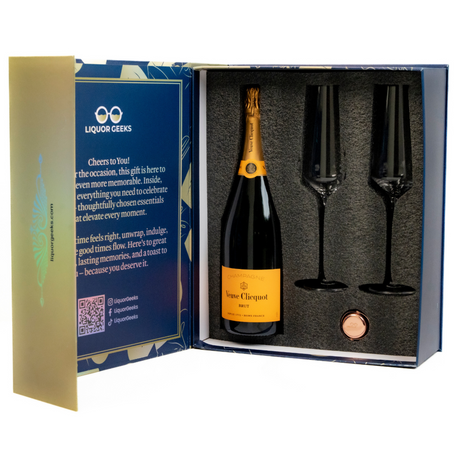
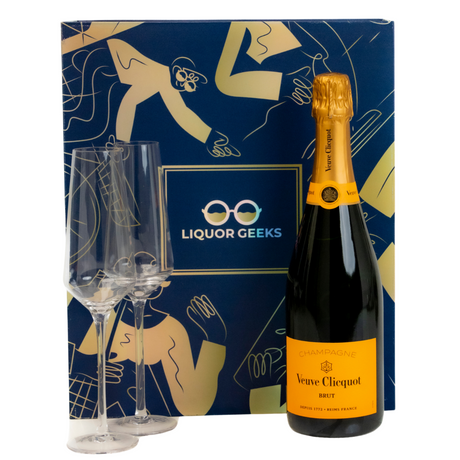
For a self-contained gift that doesn't require the host to hunt for flutes, a Yellow Label gift set with glasses and a stopper solves the problem outright. It's a stronger option than a bare bottle if you're visiting a household you don't know well, since it doesn't assume they already own Champagne flutes.
Frequently Asked Questions
What's the real difference between Veuve Clicquot Yellow Label and Rosé?
Rosé starts from the same Yellow Label blend but adds a portion of the house's still red wine, giving it more red-fruit character and a fuller body. Yellow Label is drier and more food-flexible; Rosé leans sweeter in perception and pairs especially well with cranberry and ham.
Is La Grande Dame worth buying for a holiday dinner?
It's worth it for a milestone occasion rather than a routine one. La Grande Dame is a vintage-dated, Grand Cru-driven prestige cuvée meant to be savored on its own, not poured alongside gravy and stuffing. Save it for a toast or for dessert, when the table can focus on it.
How far ahead should I chill Champagne before Thanksgiving dinner?
Refrigerate the bottle for at least three to four hours, or plan on roughly 20–30 minutes in an ice-and-water bucket if you're chilling it last minute. An ice jacket or sleeve is a practical way to hold serving temperature at the table once it's opened.
Is it rude to bring Champagne as a Thanksgiving hostess gift?
Not at all—it's one of the safer hosting gifts precisely because it doesn't need to match the menu. Hand it to the host directly, mention whether you'd like it opened that day, and don't be offended if they save it for later.
Can Veuve Clicquot Rosé be served with dessert instead of dinner?
Yes. Its red-fruit profile works well alongside cranberry desserts or a fruit tart, though a drier style like Yellow Label Brut is generally the better match for a traditional pumpkin or pecan pie.
Shop Champagne at Liquor Geeks
Shipping rules for Champagne and other wine vary by state, so check our shipping eligibility page before placing an order, especially if you're sending a bottle to someone else's table this year.